
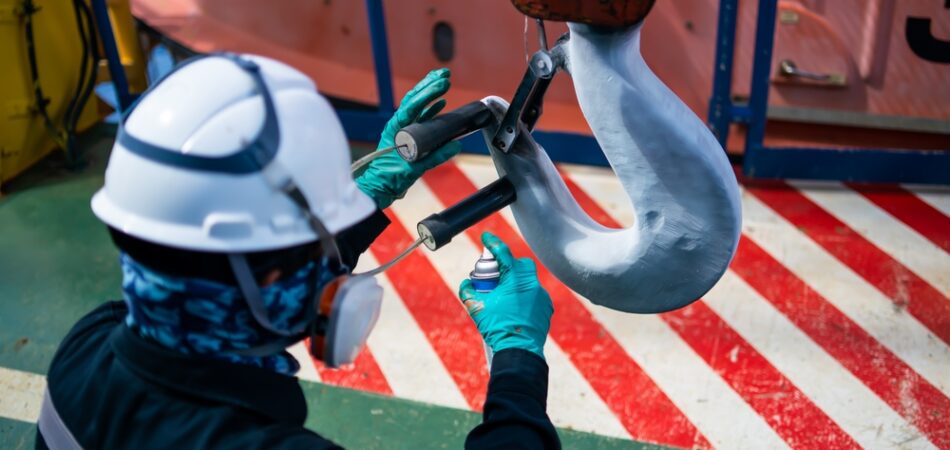
Cranes used in Chandler warehouses, fabrication facilities, construction sites, and industrial operations face demanding conditions, from heavy workloads to Arizona heat and dust. Knowing when a crane needs inspection is not simply a maintenance question. The correct inspection schedule depends on the type of crane, how it is used, its condition, and the safety standard that applies.
Quick answer: Crane inspections can be required as often as every shift or daily, monthly, periodically, and at least annually, depending on the crane and its application. For construction cranes, OSHA requires a competent person to perform a visual inspection each shift, monthly documented inspections while equipment is in service, and a comprehensive inspection by a qualified person at least every 12 months. Overhead and gantry cranes used in general industry follow frequent inspection intervals ranging from daily to monthly and periodic intervals ranging from 1 to 12 months.
What Arizona businesses should know
-
A single annual inspection does not replace required daily, shift, monthly, or other frequent inspections.
-
Arizona businesses generally operate under federal OSHA standards enforced through the Arizona Division of Occupational Safety and Health, or ADOSH.
-
Crane type and application matter because construction cranes and overhead or gantry cranes can fall under different OSHA inspection requirements.
-
Chandler’s heat, dust, outdoor exposure, and demanding industrial environments can justify close attention to components subject to wear or deterioration.
-
Equipment that has been modified, damaged, subjected to severe service, or left idle may require inspection before returning to normal operation.
Why Crane Inspection Frequency Matters for Chandler Businesses
Crane inspection frequency matters because safety requirements are designed to identify deterioration, malfunction, and unsafe conditions before equipment continues operating under load. For businesses in Chandler and throughout the East Valley, inspections can also reduce the likelihood that a developing problem causes unexpected downtime during manufacturing, construction, material handling, or other critical operations.
Arizona businesses operate in conditions that can place additional stress on equipment. High summer temperatures, airborne dust, outdoor storage, frequent cycling, and demanding workloads can all affect components differently over time.
That matters for facilities near the Chandler Airpark, industrial properties along Loop 202, construction projects across Maricopa County, and operations extending into Mesa, Gilbert, Tempe, Phoenix, and Queen Creek.
American Inspection and Test, Inc. is the business behind this local crane inspection guide. We encourage Arizona employers to treat inspection frequency as an ongoing safety process rather than a once-a-year calendar item.
What OSHA Requires for Crane Inspections
OSHA inspection requirements vary by crane category, but businesses should generally expect a combination of frequent inspections and more comprehensive periodic or annual inspections. The exact schedule should be determined by the applicable standard, equipment type, service severity, operating environment, manufacturer requirements, and any conditions that trigger additional inspection.
For overhead and gantry cranes covered by OSHA 29 CFR 1910.179, inspections for cranes in regular service are divided into two classifications. Frequent inspections occur at daily to monthly intervals, while periodic inspections occur at intervals of 1 to 12 months. OSHA also specifies daily inspection of certain operating mechanisms and visual daily checks of hooks and hoist chains.
For cranes and derricks covered by OSHA’s construction standard, 29 CFR 1926.1412 calls for visual inspections each shift, monthly inspections while equipment is in service, and annual or comprehensive inspections at least every 12 months. Monthly inspections must be documented, and annual inspections must be conducted by a qualified person.
ADOSH states that Arizona enforces the federal OSHA standards in 29 CFR Parts 1910 and 1926, making those requirements directly relevant to most Arizona employers covered by the state occupational safety program.
How Arizona Conditions Can Affect an Inspection Schedule
Arizona conditions can make inspection planning more important because heat, dust, outdoor exposure, and intensive equipment use may accelerate wear or make emerging defects harder to ignore. OSHA’s periodic inspection framework specifically considers equipment activity, severity of service, and environment when determining appropriate inspection intervals for overhead and gantry cranes.
A crane operating intermittently inside a climate-controlled Chandler facility may experience different conditions than equipment working outdoors on a construction site during an East Valley summer.
Dust can accumulate around mechanical and electrical components. Intense sun and prolonged heat can create demanding operating conditions for exposed equipment. High production volume can increase operating cycles, while construction activity can expose mobile equipment to changing ground conditions, transportation, setup, and repeated use.
Employers should therefore avoid treating the longest permitted interval as an automatic default. The equipment’s actual service environment matters.
Warning Signs That a Crane May Need Inspection
A crane should be evaluated promptly when operators notice changes in operation, visible damage, unusual wear, leaks, control problems, or other conditions that could affect safe use. Routine inspection intervals establish minimum checkpoints, but visible or operational warning signs should not be ignored simply because the next scheduled inspection has not arrived.
Watch for:
-
Hooks that appear bent, twisted, cracked, or unusually worn.
-
Wire rope showing kinks, crushing, broken wires, corrosion, or other deterioration.
-
Hoist chains with excessive wear, stretching, twisting, or damaged links.
-
Controls that respond inconsistently or interfere with normal operation.
-
Hydraulic or pneumatic leaks.
-
Unusual noises, vibration, or braking behavior.
-
Loose, corroded, cracked, or visibly deformed structural components.
-
Limit switches, indicators, or other operational devices that do not appear to function properly.
If a condition may affect safe operation, the appropriate inspection and corrective-action requirements should be followed before normal use continues.
When Should You Call a Crane Inspection Professional?
A professional crane inspector should be involved whenever the applicable standard requires a qualified person, when equipment has undergone certain modifications or repairs, when significant damage is suspected, or when your team cannot confidently determine whether a condition affects safe operation. Annual comprehensive construction-crane inspections specifically require a qualified person under OSHA’s standard.
Operators and competent persons may perform certain required routine inspections when they meet the applicable standard’s requirements. That does not mean every inspection should be handled as an informal operator walkaround.
More detailed evaluations may require knowledge of structural members, brakes, hooks, wire rope, controls, safety devices, load-handling components, and manufacturer criteria.
For Chandler-area businesses managing multiple cranes or busy production schedules, having an organized inspection program can also make it easier to track due dates and documented findings.
Common Reasons Arizona Cranes Need More Attention
The most common reasons a crane may need closer or more frequent inspection are heavy service, harsh operating conditions, visible deterioration, extended inactivity, modifications, and events that could have damaged the equipment. OSHA requirements recognize several of these situations rather than relying exclusively on a fixed annual schedule.
1. Heavy or severe service
Frequent lifting, high operating cycles, shock loading, or unusually demanding use can increase wear. Construction rules also require additional action when severe service creates a reasonable probability of damage or excessive wear.
2. Arizona heat and outdoor exposure
Equipment used outside in Chandler, Mesa, or Phoenix may experience prolonged heat, sunlight, dust, and weather exposure. Those conditions should be considered when determining appropriate maintenance and inspection practices.
3. Equipment modifications
Certain modifications or additions affecting safe operation or capacity require inspection before the equipment is returned to use under OSHA’s construction standard.
4. Long periods of inactivity
Idle equipment can require inspection before it returns to service. The required interval varies according to the applicable crane standard and length of inactivity.
How to Build a Practical Crane Inspection Program
A practical crane inspection program combines routine operator checks, required documented inspections, periodic or annual professional evaluations, manufacturer instructions, and a clear process for addressing deficiencies. Arizona businesses should build the schedule around the specific equipment and standard involved rather than applying one inspection interval to every crane in the facility.
Helpful practices include maintaining an equipment inventory, recording the applicable inspection standard for each crane, tracking inspection dates, keeping required documentation, and making sure employees know how to report abnormal operation or visible damage.
Manufacturer procedures also matter. For construction equipment, OSHA requires employers to follow manufacturer inspection procedures related to safe operation when those procedures are more comprehensive or require inspections more frequently than the federal rule.
DIY inspection should stop when the inspection requires qualifications the employee does not possess or when determining the significance of a deficiency requires specialized expertise.
What Results Should You Expect From a Crane Inspection?
A crane inspection should provide a structured evaluation of applicable components and identify conditions that may require correction, monitoring, maintenance, or further examination. It is not a guarantee that equipment will never fail, but properly scheduled inspections give Arizona businesses a systematic way to identify deficiencies before they become larger operational or safety concerns.
Depending on the type of inspection, components reviewed may include structural members, hooks, wire rope or chains, controls, brakes, sheaves, drums, electrical equipment, safety devices, operating mechanisms, and other load-handling components.
The findings can then help the employer determine whether equipment can remain in service or requires corrective action.
Common Crane Inspection Mistakes
The most common crane inspection mistakes involve relying only on an annual inspection, using the wrong standard, overlooking documentation, and continuing to operate equipment with unresolved warning signs. Chandler businesses can avoid these problems by treating inspection as a layered program rather than a single yearly event.
Mistake: Assuming an annual inspection covers everything.
Consequence: Required daily, shift, monthly, or frequent inspections may be missed.
Better approach: Identify every applicable inspection interval for each crane.
Mistake: Using the same checklist for every crane.
Consequence: Important requirements may be overlooked because construction cranes and general-industry cranes can fall under different standards.
Better approach: Match the checklist to the equipment and applicable regulation.
Mistake: Ignoring the manufacturer’s inspection schedule.
Consequence: More frequent manufacturer requirements may be missed.
Better approach: Review both regulatory and manufacturer criteria.
Mistake: Treating unusual operation as a maintenance issue to address later.
Consequence: A potentially significant deficiency may remain in service.
Better approach: Stop and evaluate conditions that could affect safe operation.
A Common Chandler Crane Inspection Scenario
A common Chandler scenario involves a business that schedules its annual crane inspection but overlooks the separate routine inspections required throughout the year. The annual date may be clearly marked on a calendar while daily operator checks, monthly records, or periodic inspections are handled inconsistently between departments or shifts.
The better approach is to create one inspection matrix for each piece of equipment. It should identify who performs each inspection, how often it occurs, what documentation must be retained, and what happens when a deficiency is found.
That approach can be particularly useful for busy manufacturing, distribution, fabrication, and construction operations across the East Valley.
Crane Inspection Services for Arizona Businesses
Professional crane inspection services can support the more detailed portions of an employer’s inspection program and help identify deficiencies requiring attention before equipment continues operating. The right scope should be based on the crane type, applicable OSHA standard, manufacturer requirements, previous findings, equipment condition, and operating environment.
For businesses in Chandler and surrounding communities, we can help address crane inspection needs based on the equipment and inspection scope involved.
Comparing Routine Checks With Professional Inspections
Routine checks and professional inspections serve different purposes, so Arizona businesses generally need both rather than choosing one or the other. Operator or competent-person inspections provide frequent visibility into obvious problems, while qualified-person or comprehensive inspections provide the deeper evaluation required at specific intervals or under particular circumstances.
Routine checks are useful for detecting immediate changes such as leaks, damaged hooks, abnormal controls, or visible rope problems. Professional inspections are appropriate when regulations require specialized qualifications, a comprehensive examination is due, or the condition of a component requires further evaluation.
A strong program connects the two so that findings from routine checks are not lost before the next comprehensive inspection.
Crane Inspection Service Areas
Crane inspection needs extend throughout Chandler and the surrounding East Valley, where construction, manufacturing, warehousing, and industrial businesses depend on lifting equipment. Nearby service areas may include Mesa, Gilbert, Tempe, Queen Creek, Phoenix, and other locations throughout Maricopa County.
Inspection requirements should always be matched to the specific equipment and work being performed.
What Can Happen If Crane Inspections Are Delayed?
Delaying a required crane inspection can allow wear or damage to remain unidentified, create avoidable downtime, and leave an employer without required inspection documentation. In Arizona workplaces subject to ADOSH oversight, employers should maintain inspection practices that comply with the applicable OSHA standard rather than waiting for an obvious equipment problem or regulatory inspection.
Catching issues through planned inspections can also give a business more opportunity to coordinate maintenance instead of reacting after equipment must unexpectedly be removed from service.
Frequently Asked Questions About Crane Inspections in Arizona
How often does a crane need to be inspected in Arizona?
A crane may need inspection every shift or daily, monthly, periodically, and annually, depending on its type and use. Arizona generally enforces the applicable federal OSHA standards. Construction cranes have shift, monthly, and annual requirements, while overhead and gantry cranes in general industry use frequent and periodic inspection categories.
Is an annual crane inspection enough in Chandler?
No, an annual crane inspection by itself may not satisfy all applicable inspection requirements. A construction crane can require visual inspection each shift and documented monthly inspection in addition to an annual comprehensive inspection. Overhead and gantry cranes can similarly require daily or monthly frequent inspections between periodic inspections.
Who can inspect a construction crane in Arizona?
The required inspector depends on the inspection being performed. OSHA specifies a competent person for construction-crane shift inspections and a qualified person for annual comprehensive inspections. Arizona employers should verify the qualifications required for each inspection instead of assuming that any experienced employee can perform every level of inspection.
Does a crane need inspection after sitting unused?
Yes, a crane may require inspection before returning to service after an extended period of inactivity. The specific trigger depends on the applicable standard. OSHA establishes separate return-to-service requirements for idle overhead and gantry cranes and for construction equipment that has not been in regular use.
Can Arizona heat change how often a crane should be inspected?
Operating environment can influence the appropriate inspection interval, particularly for equipment covered by standards that base periodic frequency on activity, severity of service, and environment. Chandler’s heat, outdoor exposure, and dust are practical factors employers should consider alongside OSHA requirements and the manufacturer’s recommendations.
Are monthly crane inspections required to be documented?
For construction cranes covered by OSHA 1926.1412, monthly inspections must be documented while the equipment is in service. Required documentation includes the items checked, inspection results, the inspector’s name and signature, and the date. OSHA requires those monthly records to be retained for at least three months.
Does ADOSH follow the same crane standards as federal OSHA?
Arizona generally enforces the federal OSHA standards contained in 29 CFR Parts 1910 and 1926. ADOSH confirms that these federal standards apply through Arizona’s state occupational safety program, so businesses in Chandler and elsewhere in the state should understand which federal crane standard applies to their workplace and equipment.
What if a manufacturer requires more frequent crane inspections?
More frequent manufacturer inspection procedures may need to be followed when they relate to safe operation and exceed OSHA’s construction-crane requirements. Employers should therefore review the manufacturer’s documentation rather than assuming the regulatory interval is always the only schedule that matters.
Keep Your Chandler Crane Inspection Program on Schedule
A reliable crane inspection program combines the right inspection frequency with qualified personnel, good documentation, and timely follow-up when problems are found. For Chandler businesses, understanding whether a crane requires shift, daily, monthly, periodic, annual, or event-triggered inspection is the first step toward keeping lifting equipment properly evaluated.
Protect Your Operation With the Right Crane Inspection Schedule
We can help local businesses determine the appropriate inspection scope for their crane equipment and keep required evaluations from becoming an afterthought.